


Galway is the undisputed cultural capital of the West of Ireland – a lively, colourful city perched where the River Corrib meets Galway Bay.
The city centre can be crossed on foot in around twenty minutes, but don’t do that. One of the great pleasures of Galway is wandering the narrow streets and lanes, listening to buskers, lingering and detouring as the mood takes you.
Basing yourself here for a few nights works really well. Galway is a great hub for day trips to Connemara, the Aran Islands or the Burren. By night, it comes alive with exceptional restaurants, ubiquitous traditional music and there is pretty much always some kind of festival taking place.
A Brief History of Galway
Originally a small fishing village and naval base called Dún Gaillimhe (Fort at the Mouth of the Gaillimh), the settlement took off in the 1230s when it was taken over by the Anglo-Norman knight Richard de Burgh. He fortified the town, building stone walls and narrow streets that turned Galway into a vital medieval power base.
The City of the Tribes
Galway is known as “the City of the Tribes”, a reference to the fourteen merchant families who dominated the city’s commercial and political life between the 14th and 17th centuries. Under their rule, Galway became an independent city state and a major international port, doing a roaring trade in wine, spices and timber with Spain, Portugal and France.
Siege, Decline, and Renaissance
Galway’s golden age came to a halt during the 17th century when it endured two brutal sieges – first by Oliver Cromwell’s parliamentary forces in 1652 and later during the Williamite War in 1691. The city fell into economic decline for nearly two centuries, which had the side effect of preserving much of its medieval street layout intact.
Since the late 20th century it has become a booming place again, a University city with excellent shopping, a rich cultural life and a very vibrant social scene.
What to see in Galway
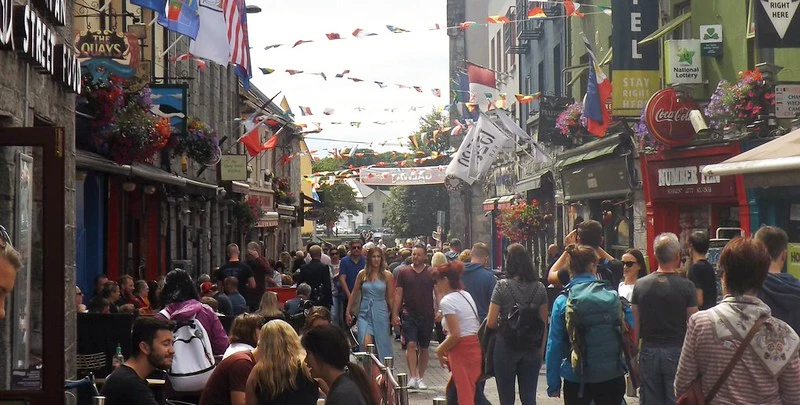
Quay Street
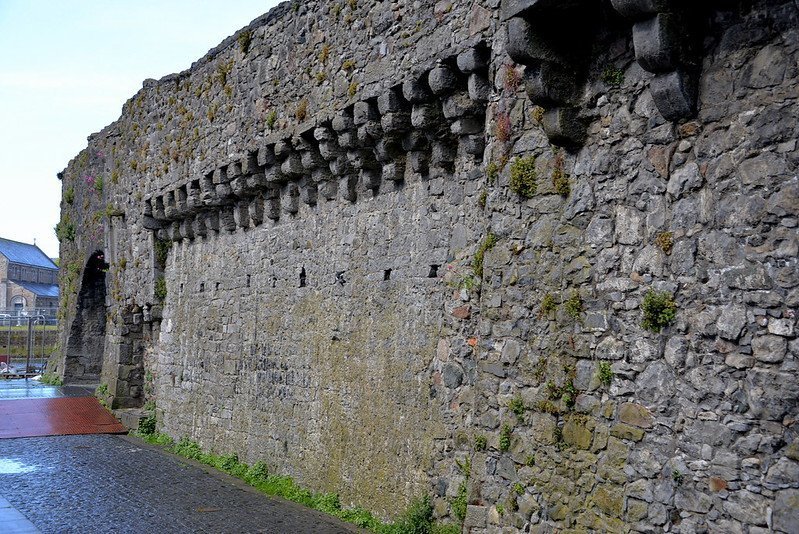
The Spanish Arch
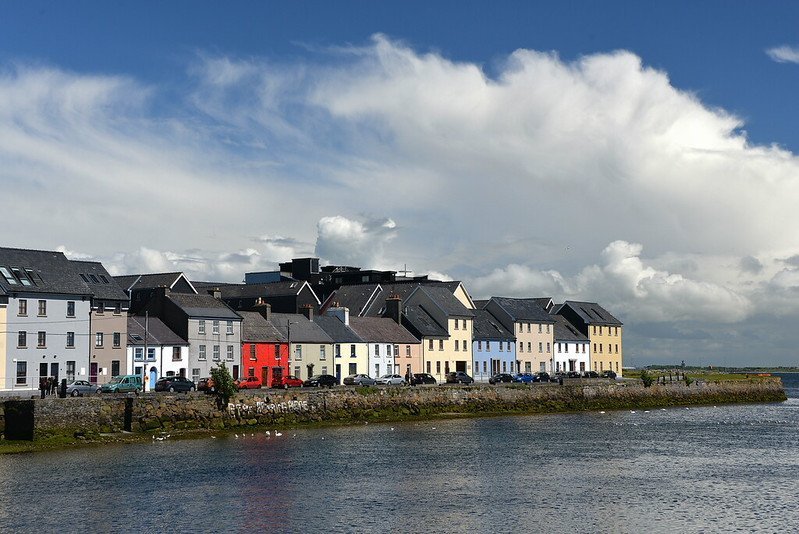
The Long Walk
Quay Street and High Street
Lined with brightly painted shopfronts, buskers, seafood bars and historic pubs, these streets follow the original medieval street pattern. It is the best part of the city to soak up the atmosphere, stop for a pint or listen to traditional music. Though it can be a bit of a tourist trap.
The Spanish Arch & The Long Walk
The Spanish Arch is a surviving section of the 1584 extension to the city walls. Originally built to protect merchant ships unloading Spanish wine, it sits right next to The Long Walk, an iconic row of painted houses facing the bay that makes for one of Galway’s most famous postcard views.
Galway City Museum
Located right beside the Spanish Arch, this free museum has three floors of local history, archaeology and sea life. It will give you an excellent overview of medieval Galway, displaying everything from ancient civic regalia to exhibits on the city’s maritime past.

St. Nicholas' Church
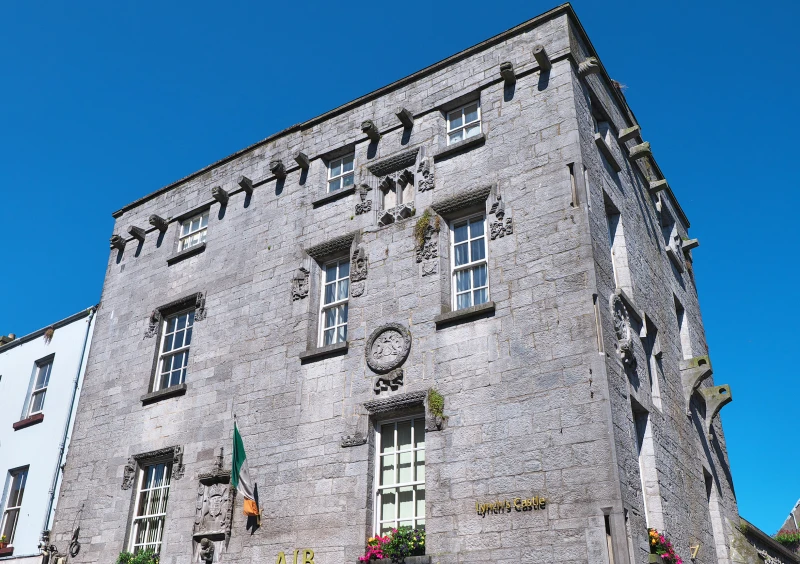
Lynch's Castle
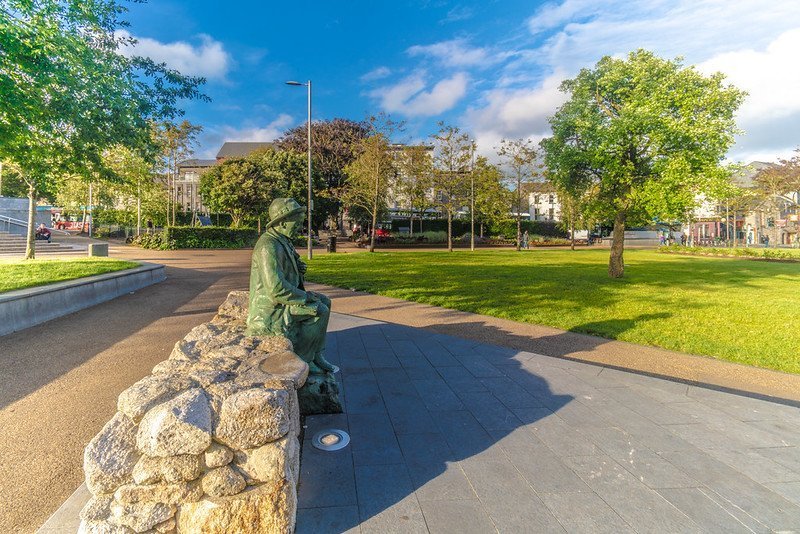
Eyre Square
St. Nicholas’ Collegiate Church
Founded in 1320, St. Nicholas is the largest continuously used medieval parish church in Ireland. Rich in history, it contains carved stone gargoyles, historic tombs and a baptismal font where centuries of Galway babies have had their heads wet. It is even said that Christopher Columbus worshipped here in 1477 before embarking on his voyage to the Americas.
Galway Market
Taking place every Saturday (and Sundays during summer) beside St. Nicholas’ Church, this busy open-air market has been operating for centuries. It’s packed with food stalls – tempting you with everything from hot crepes and madras curries to fresh local oysters – alongside local artists and craftspeople selling their work.
Lynch’s Castle & Eyre Square
Eyre Square, formally (but rarely) called John F. Kennedy Memorial Park, is the central public square in the centre of the city. While extensive modern renovations stripped away some of its old soul, it remains a convenient gathering point and landmark.
On the corner of Eyre Square and Shop Street, Lynch’s Castle is a fortified 16th-century townhouse that belonged to the most powerful of the 14 Tribes. Now operating as a bank, its exterior stone facade still features detailed gargoyles and coats of arms.

Galway Cathedral
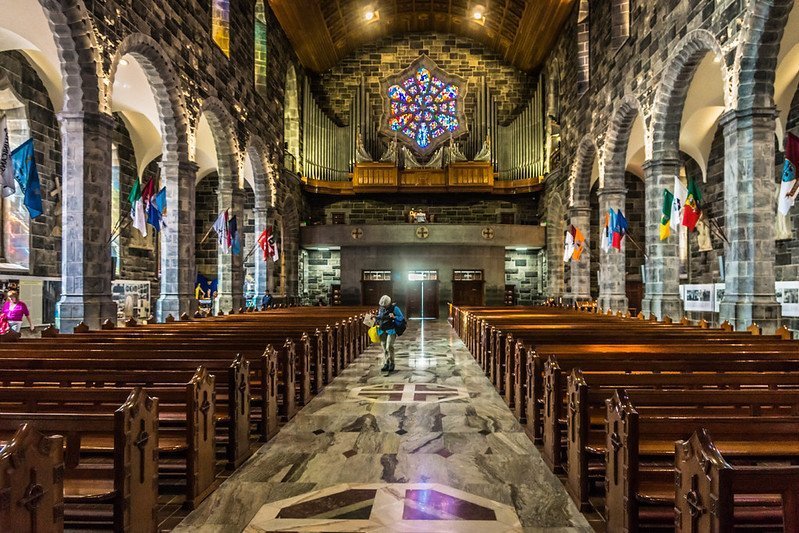
Cathedral Inside

Salthill Prom
Galway Cathedral
Standing on the west bank of the River Corrib, Galway Cathedral was completed in 1965, making it one of the last major stone cathedrals built in Europe. Constructed from local Connemara marble and granite, its huge green dome dominates the city’s skyline. Inside there are magnificent modern stained glass windows, including a rose window, and vibrant mosaics.
Salthill Promenade
A twenty minute walk along the coastline from the city centre brings you to Salthill, Galway’s seaside resort suburb. The popular two mile long prom has wonderful views across Galway Bay to the hills of Clare. Tradition dictates you must walk to the end and kick the wall before turning back.
Beware the nearby car park if the weather is stormy. High tides can rapidly flood it and there have been several occasions where cars were were completely submerged.
Arts, Culture & Festivals
If Ireland is a land of festivals, Galway is its capital. During the summer months, the city plays host to an almost continuous stream of major events.
Druid Theatre Company has been the recipient of numerous awards over the years, including a number of Tony awards. Getting along to one of their productions, if there is one running, is highly recommended.
Often involved in festivals are Macnas, a world renowned street theater company that creates legendary, giant puppet parades that transform the city streets into fantasy worlds.
Map & Directions to Galway
If you are visiting, this self-guided Galway Walking Tour will take you to all of the places mentioned above and a few more.
- Town Role: Ideal Touring Base
- Public Transit: Direct Rail Connection
- Where to Stay
Co. Galway, Ireland



No Comments Yet
Have you something to add about "Guide to Galway City"?